Why US Stocks and Bonds Make Up 47% of Global Portfolios
US stocks and bonds make up 47% of the world's portfolio. Learn why global portfolios lean on U.S. markets and how to diversify for better risk management.
Page views: 2
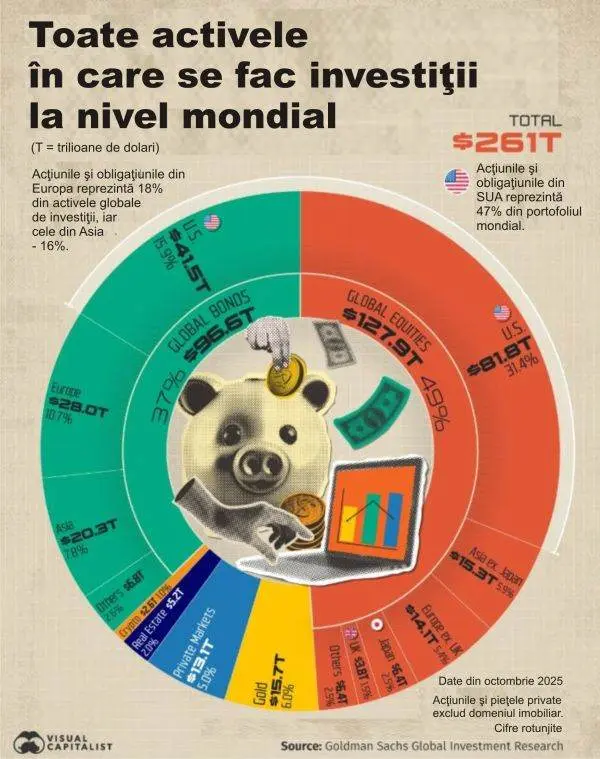
US stocks and bonds account for 47% of the world's portfolio, a striking concentration given the diversity of global markets. This dominance reflects the size, liquidity, and stability of U.S. capital markets — factors that make American equities and Treasuries a natural anchor in international investing.
Size and depth are key reasons for heavy U.S. exposure. The U.S. represents the largest share of global market capitalization, with many multinational companies listed on U.S. exchanges. Deep bond markets, clear regulation, and a trusted legal framework attract both domestic and foreign investors seeking reliable fixed-income exposure.
Liquidity and accessibility reinforce that position. U.S. stocks and bonds are highly liquid, meaning investors can buy and sell large positions without dramatically moving prices. Exchange-traded funds (ETFs), mutual funds, and global custodians make it easy for international investors to gain exposure to U.S. assets, further boosting their share in global portfolios.
For many investors, the U.S. also offers diversification benefits within a single market. The technology, healthcare, and financial sectors in the U.S. have different economic drivers than many other countries, which can reduce overall portfolio volatility. Meanwhile, U.S. bonds—especially Treasuries—are often used as a hedge during market stress.
However, a 47% allocation to U.S. stocks and bonds carries concentration risk. Political shifts, changes in monetary policy, or sector-specific downturns can disproportionately affect portfolios weighted heavily toward the U.S. Currency swings and differing economic cycles also mean that global diversification remains important for long-term resilience.
How should investors respond? First, review your asset allocation and stress-test it under different scenarios. Consider tilting toward international equities, emerging markets, and non-U.S. fixed income to capture growth opportunities and reduce single-country exposure. Use low-cost international ETFs or active managers where appropriate, and pay attention to currency risk and fees.
In short, the U.S. will likely remain central to many global portfolios because of its market size and liquidity. But a 47% allocation is a reminder to balance convenience with intentional diversification. Periodic rebalancing, clear goals, and a global mindset will help investors manage risk while pursuing returns.
Published on: December 22, 2025, 2:02 pm