Why a 2026 Bitcoin Crash Could Reshape Digital Asset Markets
2026 Bitcoin crash warnings cite regulatory pressure, tech limits, institutional vulnerabilities, and environmental backlash that could reshape digital assets.
Page views: 2
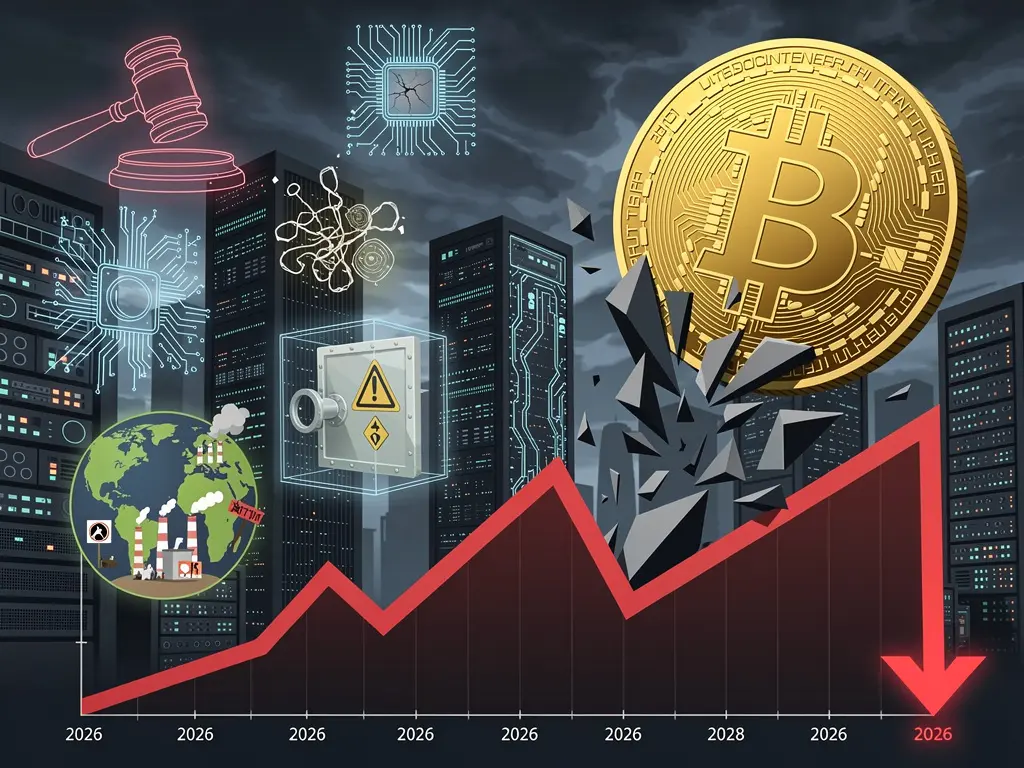
As predictions of a catastrophic 2026 Bitcoin crash gain traction, investors and industry insiders are reassessing what a major cryptocurrency downturn could mean for the wider market. Growing concern centers on four converging forces—regulatory pressure, technological limitations, institutional vulnerabilities, and environmental backlash—that together could trigger one of the most severe sell-offs in crypto history.
Regulatory pressure is perhaps the most immediate threat. Governments worldwide are accelerating efforts to tighten oversight of digital asset markets, from stricter KYC/AML rules to potential restrictions on mining and trading. Increased enforcement and unclear legal frameworks can drain liquidity, spook retail investors, and force exchanges and institutional custodians to change business models rapidly. When regulation and enforcement intensify simultaneously across major jurisdictions, market shocks can propagate faster than ever.
Technological limitations also factor into 2026 crash scenarios. Bitcoin’s underlying infrastructure faces scaling challenges, network congestion, and periodic hard-fork debates that can undermine user confidence. While layer-2 solutions and protocol upgrades offer long-term fixes, short-term bottlenecks or high transaction fees during periods of stress could magnify price volatility and accelerate an outflow of capital into more scalable alternatives.
Institutional vulnerabilities make the market more fragile today than in prior cycles. Large holders, derivative positions, and concentrated exposure among a handful of funds or exchanges increase the risk of cascade failures. If a leveraged institution fails or a major venue halts withdrawals, contagion could spread quickly through margin calls and forced liquidations. The entry of traditional financial institutions has brought liquidity but also new systemic risk dynamics.
Environmental backlash remains a potent wildcard. Bitcoin’s energy consumption and carbon footprint are under escalating scrutiny from regulators, investors, and the public. New policies favoring low-carbon assets or penalizing high-energy mining operations could drive sudden shifts in demand and supply dynamics, depressing prices and accelerating divestment.
A 2026 Bitcoin crash, driven by any combination of these pressures, would not only impact Bitcoin’s price but could reshape digital asset markets for years. Market participants should monitor regulatory developments, infrastructure upgrades, institutional exposures, and energy policy closely. Diversification, robust risk management, and transparency will be essential tools for navigating a potentially transformative moment in cryptocurrency history.
Published on: January 30, 2026, 11:02 am