US Consumer Sentiment Falls in November as Government Shutdown and Financial Strains Hit Confidence
November US consumer sentiment fell to near-record lows as the government shutdown and financial strains weakened confidence in the economy and finances.
Page views: 2
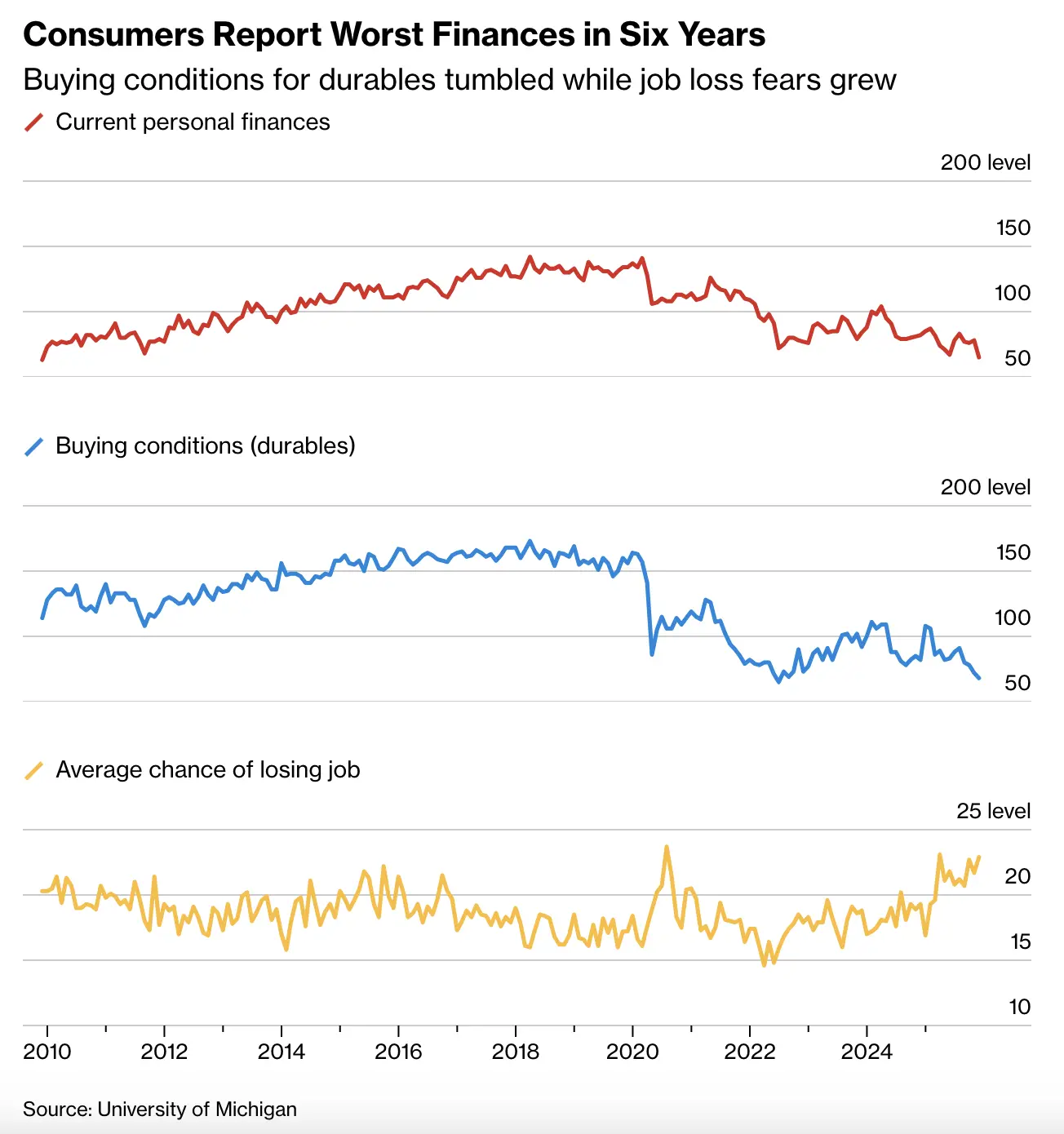
US consumer sentiment tumbled in November to near the lowest level on record, reflecting growing concerns about the economic outlook and the health of personal finances. The government shutdown weighed heavily on public confidence, amplifying worries about job security, government services, and the pace of economic recovery.
Consumer confidence is a key driver of spending, and a drop in sentiment often translates to more cautious household behavior. In November, many consumers reported heightened financial strains—rising costs, uncertainty over income, and anxiety about future expenses. These pressures can reduce discretionary spending on items like travel, dining, and nonessential retail, slowing broader economic growth.
The government shutdown added an extra layer of uncertainty. Disruptions to federal services, delayed pay for furloughed workers, and unclear policy direction can quickly erode trust in economic stability. For households already stretched by inflationary pressures and tight budgets, the shutdown magnified concerns about short-term finances and long-term planning.
How this shift in sentiment matters to markets and policymakers is straightforward: weaker consumer confidence can dampen consumption, which accounts for a significant share of GDP. Businesses may respond by scaling back hiring or investment, creating a feedback loop that further depresses confidence. Policymakers monitoring economic indicators may need to consider targeted measures to restore stability and support consumer spending.
For consumers, managing personal finances during periods of uncertainty becomes essential. Simple steps—revising budgets, building an emergency fund where possible, prioritizing high-interest debt, and seeking reliable information on benefits or support programs—can help households navigate short-term shocks. Financial advisors also recommend reassessing spending plans and keeping a longer-term perspective to avoid reactive decisions based on temporary sentiment dips.
While November’s decline in consumer sentiment is worrying, sentiment can rebound if economic signals improve and political disruptions ease. Restoring confidence will require clear policy communication, progress on fiscal issues, and visible signs that household finances are stabilizing. Until then, consumers and businesses alike are likely to remain cautious, reflecting the immediate impact of the government shutdown and broader financial strains on the economic outlook.
Published on: November 12, 2025, 1:02 pm