Bitcoin Difficulty Falls 5% to 127.17T — 14th Reset of 2026 Eases Mining Pressure
Bitcoin difficulty fell 5% to 127.17T on July 11 (block 957600), slicing 6.7T of mining pressure as hashrate slid to 908 EH/s; hashprice rose to $31.1/PH/s.
Page views: 3
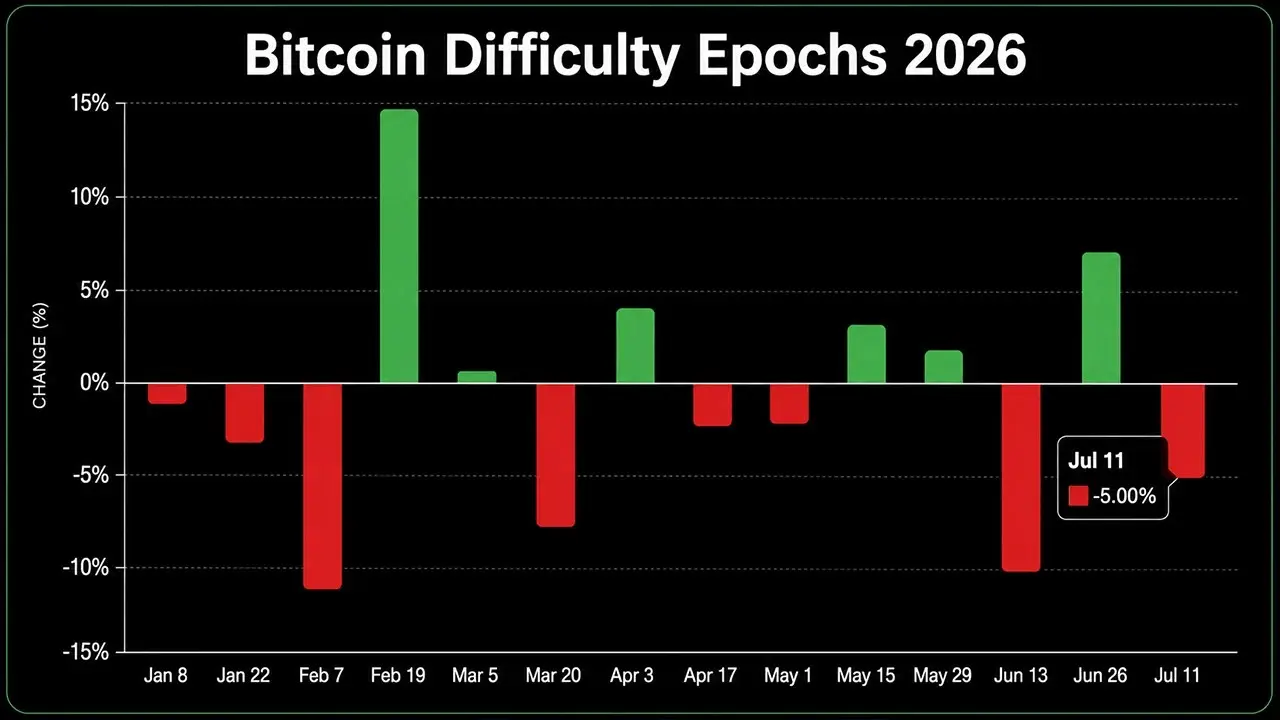
Bitcoin’s mining difficulty fell 5% to 127.17 trillion on July 11, 2026, marking the network’s 14th difficulty adjustment of the year. The reset — which landed at block height 957600 — reduced mining pressure by roughly 6.7 trillion difficulty points, offering immediate relief to miners facing tighter margins. This difficulty reset is an important signal about network conditions and miner economics heading into the mid-year period.
The cut was driven primarily by a notable decline in hashrate. Over the preceding ten days the network hashrate dropped about 7.9% to roughly 908 EH/s, prompting the automatic recalibration. Difficulty adjustments occur roughly every 2,016 blocks to keep block times near the 10-minute target; when hashing power falls, difficulty is lowered to keep blocks flowing at the expected rate. This 5% fall reflects miners scaling back operations or temporarily taking older rigs offline as margins shift.
Despite the difficulty reduction, hashprice — the revenue earned per unit of hashing power — actually rose 12.5% to $31.1 per PH/s. That improvement gives miners slightly better returns for their work, but hashprice remains 37.2% below its October 2025 peak. In practical terms, some marginal operators may now find short-term relief from the lower difficulty and higher hashprice, while larger miners will continue to focus on efficiency and power costs.
For miners and market watchers, the adjustment highlights the dynamic balance of network security, economics, and miner behavior. Lower difficulty reduces the computational barrier to find blocks, which can help maintain stable block production during periods of declining hashrate. At the same time, the increase in hashprice shows how miner revenue can recover even as network difficulty shifts.
Looking ahead, pay attention to hashrate trends and upcoming difficulty windows. If hashrate rebounds, difficulty will climb again; if it continues to fall, further resets could follow, each with implications for miner profitability and network performance. For now, Bitcoin’s 14th difficulty reset in 2026 eases immediate mining pressure and provides a useful barometer of the health of the mining ecosystem.
Published on: July 13, 2026, 6:03 am